
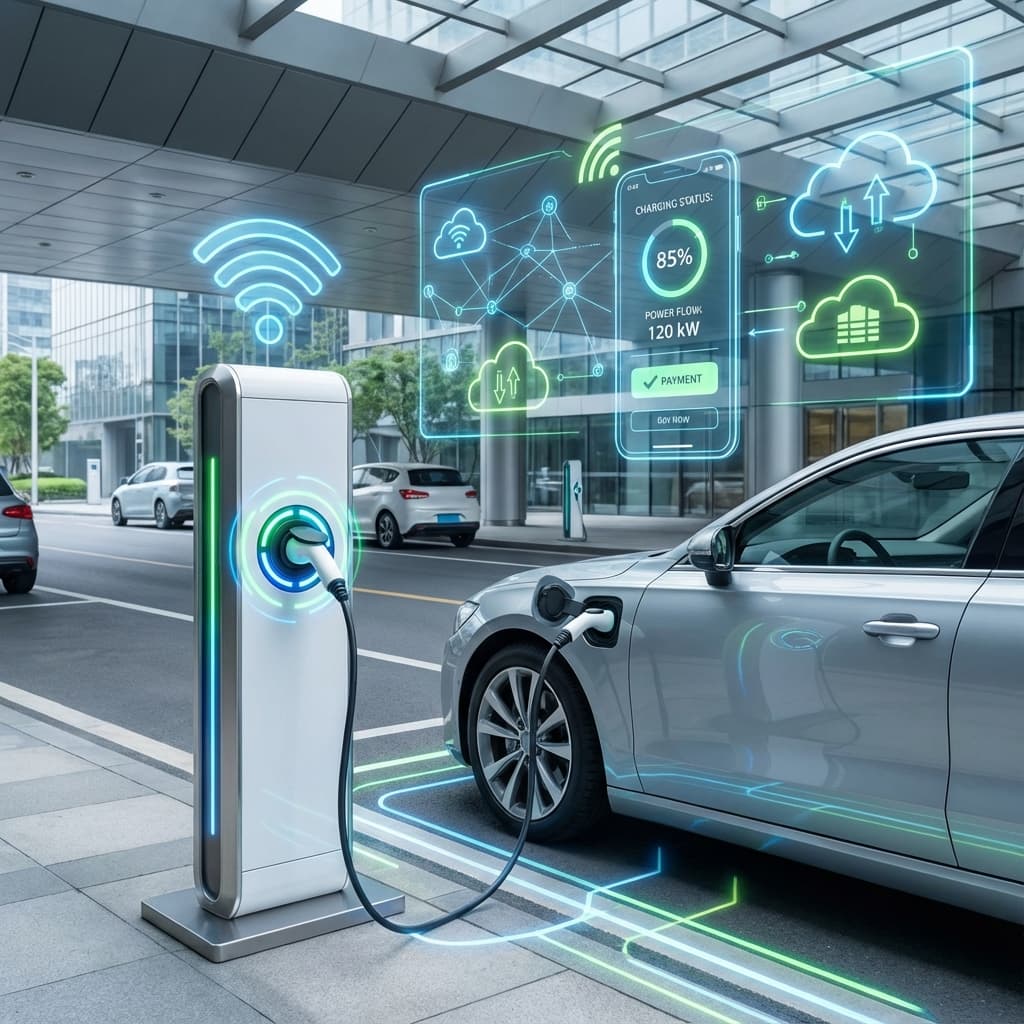
IOT & EV CHARGING
IoT-Enabled EV Charging Network
Powering the electric vehicle revolution with intelligent infrastructure. We built a comprehensive IoT platform that connects, monitors, and optimizes thousands of EV charging stations, making electric vehicle charging as convenient and reliable as traditional refueling.
Client Overview
Our client operates one of North America's largest EV charging networks with ambitions to accelerate electric vehicle adoption. Their fragmented infrastructure multiple charging station vendors, inconsistent reliability, and poor user experience was hindering growth. They needed a unified IoT platform to manage their expanding network, optimize energy usage, ensure high uptime, and provide seamless experiences for EV drivers across thousands of charging locations.
5,000+ charging stations across North America
IoT connectivity and real-time monitoring requirements
Smart grid integration and load balancing needs
Business Challenge
Our client faced several critical challenges in building a modern platform

Fragmented Charging Network
EV drivers faced confusion navigating multiple charging networks with different apps, payment systems, and availability data. Charging station operators struggled to manage their infrastructure efficiently.

Grid Management & Load Balancing
Uncoordinated charging created grid stress during peak hours. The network needed smart load balancing to distribute charging load, integrate renewable energy, and prevent grid overload.

Poor Station Uptime
Charging stations frequently went offline without operators knowing. Lack of predictive maintenance and remote diagnostics led to 30% downtime, frustrating EV drivers and reducing revenue.
Our Solution
We delivered a comprehensive solution addressing all key requirements
Unified IoT Management Platform
We built a comprehensive IoT platform connecting 5,000+ charging stations with real-time monitoring, remote diagnostics, and centralized management. The system tracks energy consumption, charging sessions, and station health with sub-second data updates.

Smart Load Balancing Engine
Developed AI-powered load balancing that dynamically distributes charging load based on grid capacity, electricity pricing, and renewable energy availability. The system optimizes charging schedules to reduce costs while preventing grid overload.

Predictive Maintenance System
Implemented machine learning algorithms analyzing sensor data to predict equipment failures before they occur. Automated alerts enable proactive maintenance, reducing downtime from 30% to under 3%.

Driver-Focused Mobile App
Created unified mobile app for EV drivers showing real-time station availability, pricing, navigation, and seamless payment across all network stations. Users can reserve charging slots and track charging progress remotely.
Outcomes / Benefits
The IoT EV charging platform accelerated electric vehicle adoption by making charging as convenient as refueling traditional vehicles.

97% Station Uptime
Predictive maintenance and remote diagnostics increased station uptime from 70% to 97%. EV drivers now trust the network, with 92% reporting improved charging reliability and satisfaction.

40% Energy Cost Reduction
Smart load balancing and renewable energy integration reduced electricity costs by 40%. Off-peak charging incentives shifted 65% of charging to low-cost periods, benefiting both operators and drivers.

5x Network Growth
The platform's success enabled rapid network expansion from 1,000 to 5,000+ stations within 18 months. Standardized management reduced operational costs per station by 50%, improving economics.

Enhanced Grid Stability
Smart charging prevented grid overload during peak hours while integrating 30% renewable energy. Utility partnerships generated $2M annual revenue through demand response programs.
Conclusion
The IoT EV Charging Platform has transformed electric vehicle infrastructure from a fragmented, unreliable network into a seamless, intelligent system. By achieving 97% uptime, reducing energy costs by 40%, and enabling 5x network growth, the platform proves that smart technology can accelerate the transition to electric mobility. The success demonstrates that when charging becomes as reliable and convenient as traditional refueling, electric vehicles can truly go mainstream. This platform is not just managing charging stations it's powering the future of sustainable transportation.